

Surface finishing has transformed into a highly precise engineering process. Quality of coating has a direct influence on durability, corrosion resistance and how the product is perceived in today’s industrial environment. To meet the demands of customers who require flawless finishes as well as stricter global standards, many facilities have turned to paint robots.
Modern paint robots bring structured motion and programmable precision to the applications that previously relied on operator technique. By automating spray paths speeds, and angles of application manufacturers can eliminate a lot of the inconsistencies that lead to uneven film build or excessive material use. This results in a consistent coating process that allows for better First Time Quality and reduced Rework.
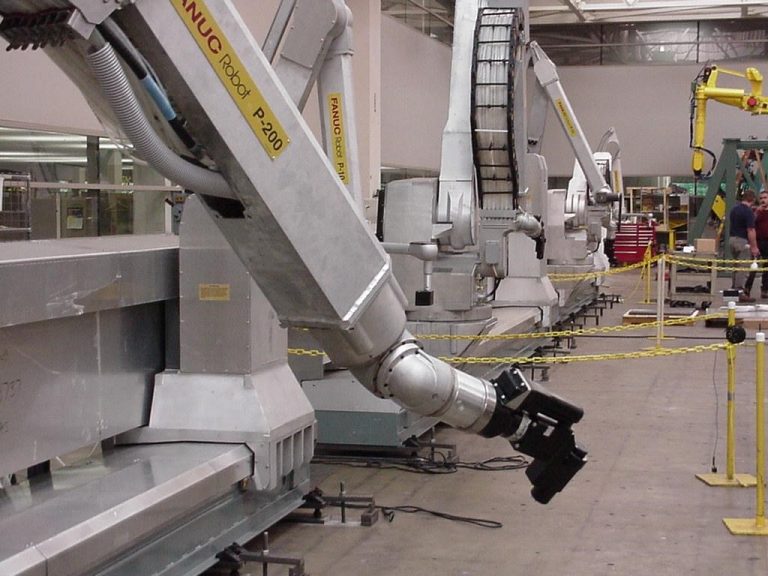
Image credit: automatedsolutions.com.au
Consistency Performance, Efficiency, and Measurable gains
Manual painting often introduces variation in coverage and thickness because of human fatigue or small differences in technique. Paint robots can eliminate this variation by repeating identical motion patterns throughout every production cycle. This level of repetition ensures an uniform surface finish and optimal material distribution on each part.
A paint system that is robotic can enhance the efficiency of transfer. Overspray of paint is reduced when the distance and orientation between the applicator’s and component is maintained in a precise manner. Reducing the amount of material wasted results in cost savings. The reduction in emission of volatile organic compounds also help to ensure environmental compliance.
Integrated fluid handling within paint robotics ensures accurate mixing ratios for multi-component coatings. Inconsistencies can be eliminated which can compromise the integrity and quality of the finished product. The ability to control flow in conjunction with programmable parameter settings allows manufacturers to modify the atomisation or spray pattern without interrupting production.
Productivity and Safer Work Environments
The adoption of a robot painter can bring substantial benefits in terms of increased uptime. Robotic paint cells are more efficient than manual operation because they operate without interruption. Once they are programmed, they can ensure continuous throughput with no interruptions or constant supervision.
It is vital to think about the safety of any establishment that employs solvent-based or bi-component coatings. Paint atomised can cause hazardous conditions, particularly when working with substances which are explosive or reactant. Modern paint robots can operate with safety in challenging environment. This lowers the risk of exposure to harmful chemicals and enhances the safety of workers.
Conveyor track technology enhances productivity further, allowing paint applications by robots as the parts continue to move. This technology expands the working space and keeps production lines operating efficiently.
Australian Automation Expertise Supporting Industry
Access to automation partners that have expertise is crucial for businesses that want to modernise finishing operations. Automated Solutions in Australia has an established reputation for offering the most advanced robotic integration solutions. The team has a wealth of experience in the field of automation engineering and is certified as FANUC robot integration experts. They assist businesses in implementing robot paint solutions that are tailored to their needs.
Through a combination of technical expertise and practical industry experience, Automated Solutions assists manufacturers in evaluating their current methods and conceiving the most efficient robotic paint cells. Facilities will gain a greater understanding of improvements in performance through collaboration, simulation and integration of systems.
The adoption of paint robotics isn’t only about automation. It is about tangible improvements in quality as well as safety and efficiency. A well-engineered system for painting transforms surface finishing into a controlled consistent, cost-effective, and repeatable operation. With the assistance of knowledgeable technicians in automation, manufacturers can strengthen their competitiveness and ensure long-term success in an increasingly challenging market.