

Police paperwork sometimes summarises hours of activity in only a few pages. The alleged offence may be described in one line.
What happened is often far more complicated than the written summary suggests.
A family evening might begin with dinner at seven, shift into an argument at nine, and end with a neighbour contacting police after someone leaves and later comes back. In another case, a driver spends time with friends, drives away, is stopped miles later, completes roadside exercises and a preliminary breath test, and is arrested. Hours of decisions and interactions may ultimately be recorded as one accusation.
One useful task for criminal defense lawyers in Grand Rapids, Michigan, is to restore the order of events behind the allegation.
The Story May Start Long Before an Arrest
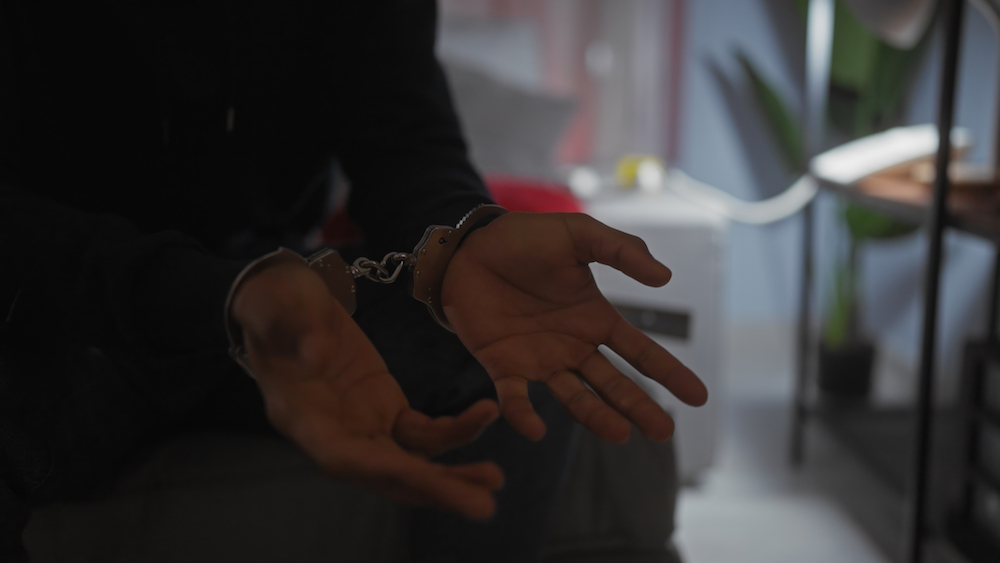
The arrest or first police contact may dominate someone’s memory, whether it involved handcuffs, flashing lights, or an unexpected call. A fuller picture can require tracing events that occurred earlier.
In a domestic violence case, the relationship between the individuals is legally relevant under Michigan law. According to the practice’s information, the relevant relationships include current or former spouses, co-parents, present or past dating partners, and current or former household members.
Events preceding the call to police can be useful in establish context. Was there an earlier dispute, and which people were present at the outset? Did a person depart and later return? What communications occurred around that time?
The purpose is not to create a different version of the facts. They help domestic violence defense lawyers in Grand Rapids, Michigan understand the allegation in its actual sequence rather than treating the moment police arrived as the beginning of everything.
The specific charge is important as well. Michigan distinguishes among domestic violence offences; the law firm notes that prior convictions can influence the seriousness of subsequent charges.
An OWI Stop Has Its Own Timeline
A suspected drunk-driving incident may unfold quickly, yet the order of events remains important. The timeline can include driving conduct, the basis for the stop, observations after contact, roadside exercises, statements, testing, and the eventual arrest. Combining these stages into a single incident can hide their distinct roles.
Under MCL 257.625, Michigan refers to the offence as Operating While Intoxicated, abbreviated OWI. The firm’s materials describe a preliminary breath test, or PBT, as a roadside screening tool rather than trial proof of intoxication; it may be considered when determining probable cause.
That distinction helps explain why drunk driving defense lawyers in Grand Rapids, Michigan, may examine the whole stop instead of concentrating only on a roadside number.
A Phone Can Hold Pieces of the Timeline
Police do not personally witness the events underlying every criminal investigation.
Allegations involving sexual conduct may relate to past encounters within dating, family, or workplace contexts. According to the practice’s information, a person can become aware of an investigation without first being arrested.
The chronology may then be distributed across several sources. Communications may provide timestamps, digital material may help reconstruct events, and statements may offer conflicting descriptions of the same period.
A message alone should not be treated as conclusive proof for either side. Instead, criminal sexual conduct defense lawyers in Grand Rapids, Michigan, may assess the connections among communications, witness accounts, credibility issues, and other information.
Memory and Documentation Are Not the Same Thing
Memory of a difficult encounter can preserve impressions more readily than precise timestamps. ‘Later that evening’ may sound clear in ordinary conversation while remaining too vague for an important legal issue.
Call histories, saved communications, photos, receipts, court paperwork, and similar records can sometimes supply useful timestamps. Their significance will vary with the facts of the matter.
It is important to keep records intact rather than changing them to make events look more favourable. Counsel can assess the potential importance of the records and the proper way to handle them.
A Case Number Can’t Capture an Entire Evening
Shawn Haff states that he has more than 16 years’ experience practising criminal defence in Grand Rapids. The Criminal Defense Law Center of West Michigan reports handling more than 1,500 criminal matters across over 25 years of combined practice. The firm lists OWI, domestic violence, assault, drug offences, weapons allegations, sexual offences, retail fraud, expungements, and driver’s licence restoration among its services.
Past outcomes, including dismissals, acquittals, reductions, or favourable pleas, cannot guarantee the outcome of a different case.
Every case involves its own people, allegations, evidence, and sequence of events. That individuality is the reason chronology matters.
Police may make an arrest within minutes, while the accusation itself fits in a short phrase. Understanding what led to it may require slowing the evening down and examining events in the order they occurred.