

It’s not difficult to process one bank statement. If only one PDF file is needed it’s even a manual entry to be manageable.
Now multiply this task over many businesses, several accounts, and a variety of statement times.
The problem is solved. It was once a straightforward clerical task, but now it’s a long-winded process that consumes staff time and can lead to inconsistent data entry. Better bank statement conversion doesn’t just mean making a single document more efficient. It’s about creating an efficient system as volume increases.
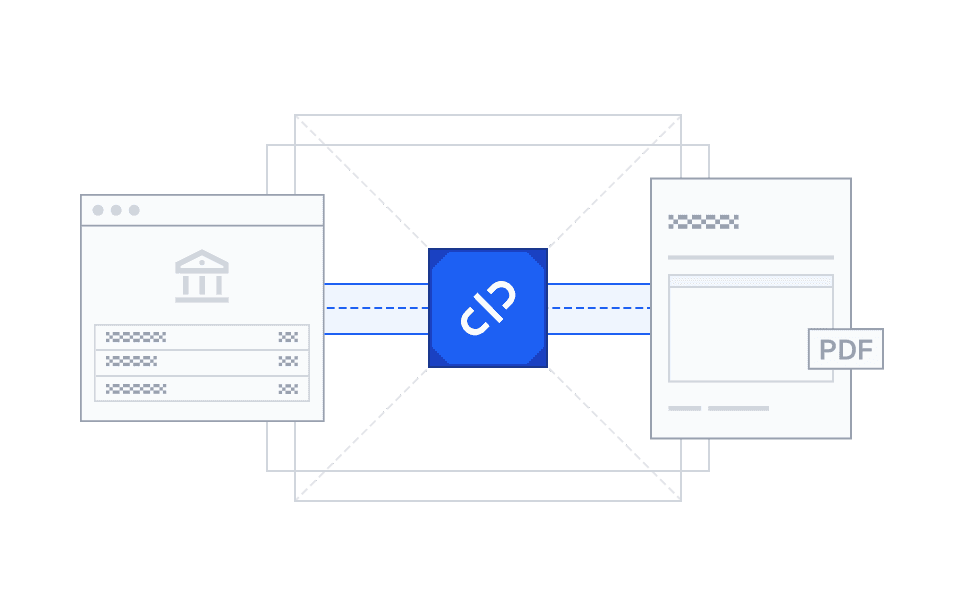
Image credit: docubrew.com
The problem is in repetition.
Imagine a company in accounting that receives PDFs every month from multiple clients. One client is Chase and the other Wells Fargo. Others send statements from Bank of America or Capital One.
Opening each PDF and entering each transaction manually requires repeating the same manual procedure over and over.
A bank statement converter can shift that workflow from transcription toward review. Docubrew takes the transaction data directly from the bank statement instead of using estimates for financial values. It’s a structured file that can be reviewed prior to use. With the increase in document volume this distinction becomes more important.
Batch processing can alter the equation
In the case of occasional conversions infrequently, it might be sensible to manage files separately. Accounting firms face different realities. Docubrew permits multiple statements to be uploaded and processed in one batch, with individual results. So, a company can go through a large collection of client documents without creating each transaction table.
Users can convert bank statements to CSV format and then examine the details of transactions.
Scanned paper statements can’t be excluded automatically. Docubrew offers OCR for scanned pdfs. This can be useful when a client has both native PDFs as well as scans in their documents from the past.
Create Outputs to complete the Accounting Work Ahead
The process doesn’t stop after the conversion. The transaction is usually required to be delivered to a destination.
Docubrew is able to export CSV, Excel and QBO. If you are a team member who needs to move bank statements into Quickbooks, QBO provides an available output option alongside the standard spreadsheet formats.
Businesses that convert regularly bank statements to Quickbooks can build a more regular process for accepting statements as well as processing them, reviewing the data extracted and preparing the correct data files to support the accounting workflow.
The human review is still essential. While automation is able to reduce repetition of transcriptions, bookkeepers have to verify financial data and finish the accounting tasks.
The data from the clients is a Workflow Decision Itself
An increase in the volume of documents also implies more sensitive information regarding clients.
Docubrew offers two processing approaches. Windows desktop software converts files locally and allows them to stay on the computer of the company. Docubrew states that the cloud option uploads documents that are encrypted. Additionally, all uploaded and converted documents are deleted immediately after 24 hours.
An accounting firm can select the strategy that is most appropriate to its requirements for internal handling.
Scale the Process, not the Repetitive Work
As the practice of bookkeeping grows the number of financial documents that must be anticipated. The practice should not automatically allow more copy and paste work.
If you have 50 customers, can the same process that been effective for just 5 clients work?
Through standardizing the way statements are received, converted, reviewed and formatted using accounting software, businesses can create a workflow to handle recurring volumes instead of considering every PDF as an original manual project.