

Although a pumping station looks like a basic building from the outside but in reality, every project is different. In one case, wastewater could need to be moved uphill in order to accommodate a building project. Another location may require to maintain pressure on commercial property that has changing elevations. The project’s type will depend on whether it is industrial, public, or private, each one has their own set of specifications, rules, as well as longer-term operational goals.
That is why pumping systems are not a subject to an uni-dimensional approach. A successful station must be constructed around the particulars of the location, the flow conditions, the ownership requirements, and the future of the land it is serving. Romtec Utilities works from that perspective, designing each package pumping system to fit the exact needs of the project rather than forcing the project to fit a generic system.
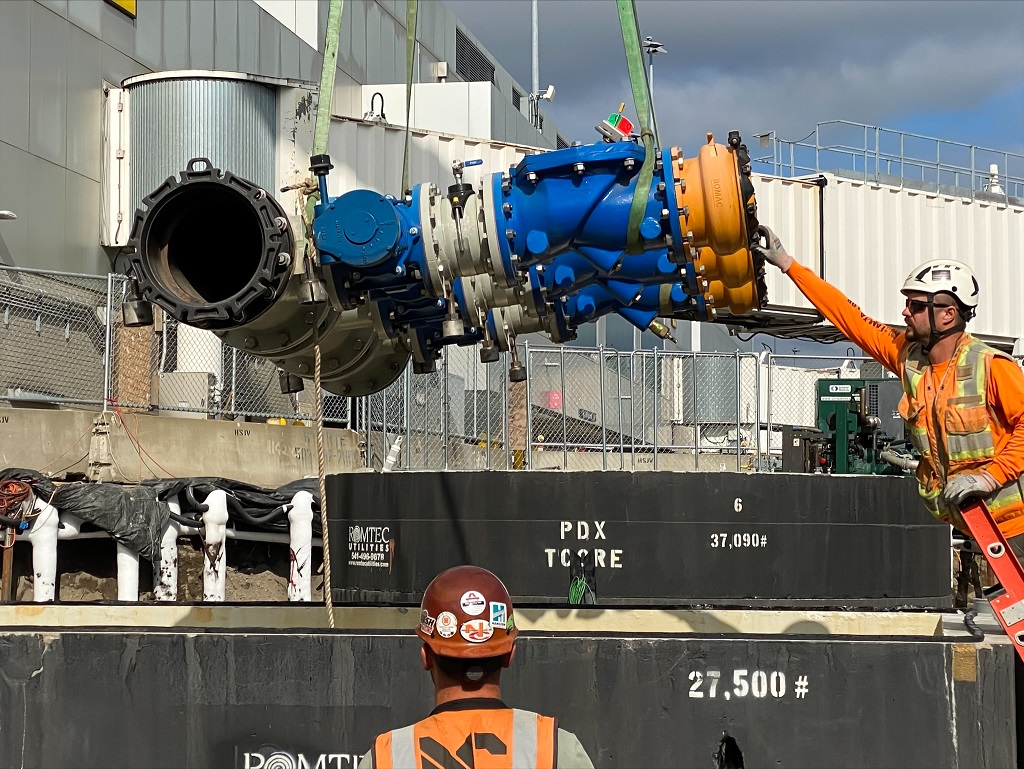
Pumping goes beyond moving water.
In essence, the purpose of a pumping station is to move wastewater or water that gravity alone can’t do the job. But constructing a system that does what it is supposed to do is not enough. It should also be simple to manage and adhere to all laws and regulations, both state and local. It has to work in real life, not just on paper.
This covers everything from the design of structural elements and wet well sizing to controls as well as electrical systems, communication equipment and access for maintenance personnel. If any of those components is poorly designed, the system may create operational headaches for long time to come. This is one reason that owners and engineers are eager to collaborate with the top designers of lift stations. Experience is important when trying to balance longevity, hydraulic performance budget, as well as constraints on the site at once.
Romtec Utilities is able to bring these fields together under one umbrella. Romtec Utilities manages the mechanical, structural and electrical components of the station as a system, which means that customers don’t have to coordinate different vendors. The single source solution will reduce time in the design process, eliminate confusion when purchasing and smooth out the installation.
Package pumping systems can reduce the complexity when they are designed properly.
Package pumping systems are able to simplify infrastructure projects by combining essential components to create a seamless solution. The real value lies in how well the package has been engineered. A poorly matched system can result in problems with performance, over-sized equipment, unnecessary costs, or long-term maintenance problems.
Romtec Utilities treats each package as a customized solution not just a catalog item. This means choosing the best pumps, controls and valves for your particular site in addition to the enclosures, piping, and enclosure options. It is also important to consider the way in which the system will function as well as how it will be monitored and maintained. Planning coordination at an early stage can help prevent more serious problems in the utility infrastructure.
Booster pumps can solve a completely different kind of infrastructure issue
Not every project is about water. In the majority of construction projects, keeping the water pressure is as important as moving the sewage. In this situation booster pumps are essential. They ensure that water flows efficiently in a distribution system even when there are pressure issues due to changes in elevation, lengthy pipe runs, or high demand.
Booster systems generally require a different type of engineering approach because they may comprise control buildings that use variable frequency drives, SCADA integration, telemetry and architectural considerations depending on the site. Romtec Utilities designs these stations using the same specialized approach as wastewater systems, ensuring the final result works both functionally and operationally.
Better planning results in better long-term performance
One of the most valuable aspects of the Romtec Utilities process is the early design support that it offers customers. The support for design and engineering allows team members to get a better idea of the scope, configuration and cost of an installation before they move too far in procurement or construction. Developers, consultants, and public agencies can benefit greatly from this.
Designing well is the key to success. A good design partner does more than simply supply equipment. A reliable design partner will help to design a sustainable solution that fits the site and supports the owner’s goals.
In the case of utility work, the most effective systems are ones that people don’t notice since they’re working. This level of reliability does not just occurs. This is a result of meticulous engineering, coordination and experience in the design of each device to satisfy the demands of the particular project.